
Are you ready to take your fitness journey to the next level? Can a structured fitness program truly help you achieve your physical goals? The Body Performance Progression System is designed to guide you through a comprehensive physical development system that unlocks your full potential.
This innovative fitness program is tailored to help you progress at your own pace, ensuring a safe and effective journey towards your goals. By focusing on progressive overload and periodization, it provides a clear roadmap to achieving optimal physical development.
Key Takeaways
- Discover a structured approach to fitness with the Body Performance Progression System.
- Learn how to progress at your own pace safely and effectively.
- Understand the importance of progressive overload in physical development.
- Explore the benefits of a comprehensive physical development system.
- Achieve your fitness goals with a tailored fitness program.
1. Understanding the Body Performance Progression System
Unlocking your body’s full potential starts with understanding the principles behind the Body Performance Progression System. This comprehensive athletic training plan is designed to enhance your overall fitness and athletic performance through a systematic approach.
What Sets This Fitness Program Apart
The Body Performance Progression System distinguishes itself from other fitness programs through its holistic approach to athletic development. It doesn’t just focus on one aspect of fitness; instead, it encompasses a broad range of exercises and training methods tailored to improve overall performance.
“The key to success lies in a well-structured training plan that addresses the individual’s specific needs and goals,” as emphasized by fitness experts. This quote underscores the importance of a personalized approach in athletic training.
The Science Behind Systematic Performance Enhancement
The science behind the Body Performance Progression System is rooted in the principle of progressive overload, which involves gradually increasing the intensity of workouts to challenge the body and stimulate improvement. This systematic approach ensures that the body is always pushed to adapt, leading to enhanced performance over time.
- Progressive overload to challenge muscles and cardiovascular system
- Strategic recovery to allow for muscle repair and growth
- Personalization to tailor the training plan to individual needs and goals
Who Benefits Most From This Athletic Training Plan
This sports performance enhancement strategy is beneficial for a wide range of individuals, from professional athletes looking to gain a competitive edge to fitness enthusiasts seeking to improve their overall health and performance. The exercise optimization method embedded in the Body Performance Progression System makes it an ideal choice for anyone committed to achieving peak physical condition.
By understanding and applying the principles of the Body Performance Progression System, individuals can unlock their full potential and achieve significant improvements in their athletic performance.
2. Essential Principles of Your Physical Development System
To achieve significant gains in physical performance, it’s crucial to grasp the essential principles that underpin your development system. A well-structured physical development system is the backbone of any successful fitness regimen, providing a clear roadmap for progression and adaptation.

Progressive Overload: The Foundation of Growth
Progressive overload is a fundamental principle that involves gradually increasing the intensity of your workouts to challenge your muscles and stimulate growth. This can be achieved by adding weight, reps, or sets over time, or by decreasing rest time between exercises. By consistently applying progressive overload, you ensure that your body continues to adapt and improve.
For example, if you’re doing a strength training program, you might start with three sets of 10 reps at 50 pounds. As you get stronger, you could progress to four sets of 12 reps at 55 pounds. This gradual increase in intensity is what drives muscle hypertrophy and strength gains.
Strategic Recovery for Optimal Adaptation
While progressive overload is crucial for growth, strategic recovery is equally important for allowing your body to adapt to the demands you’re placing on it. Recovery involves more than just rest; it includes techniques like foam rolling, stretching, and nutrition planning to help your body repair and rebuild muscle tissue.
A well-planned recovery strategy can include active recovery days, where you engage in low-intensity activities like yoga or light cardio. This helps promote blood flow and aids in the removal of metabolic waste products that can build up during intense training.
Personalizing Your Exercise Optimization Method
Personalization is key to maximizing the effectiveness of your exercise optimization method. This involves tailoring your workout routine to your individual needs, goals, and preferences. By understanding your strengths, weaknesses, and any limitations you may have, you can create a more focused and efficient training program.
For instance, if you’re training for a specific sport, you might incorporate sport-specific drills into your routine to improve your performance. Similarly, if you have a history of injury, you might focus on exercises that strengthen the affected area and improve your overall resilience.
3. Establishing Your Performance Baseline
The first step towards a successful body transformation program is setting a baseline for your current fitness level. This foundational step allows you to understand your strengths, weaknesses, and areas for improvement, ultimately guiding you towards a more effective fitness journey.
Conducting Your Initial Fitness Assessment
To establish a comprehensive baseline, you’ll need to conduct an initial fitness assessment. This involves evaluating your current physical condition through a series of tests and measurements, including cardiovascular endurance, muscular strength, flexibility, and body composition.
Key components of the initial assessment include:
- Cardiovascular endurance tests, such as a 1-mile walk or a 20-minute run
- Muscular strength evaluations, like squats, push-ups, or deadlifts
- Flexibility assessments, including hamstring and hip flexor tests
- Body composition analysis, using measurements like body fat percentage or waist circumference

Identifying Strengths and Limitations
Once you’ve completed your initial fitness assessment, it’s crucial to identify your strengths and limitations. This step helps you understand where you excel and where you need improvement, allowing you to tailor your fitness program accordingly.
For instance, you might discover that you have excellent cardiovascular endurance but struggle with muscular strength. This insight enables you to focus on building strength while maintaining your cardiovascular fitness.
“Understanding your limitations is just as important as recognizing your strengths. By acknowledging areas for improvement, you can create a more balanced and effective fitness plan.” – Fitness Expert
Creating Measurable Performance Goals
With your baseline established and strengths and limitations identified, the next step is to create measurable performance goals. These goals should be specific, achievable, relevant, and time-bound (SMART), providing a clear direction for your fitness journey.
| Goal Type | Example | Timeline |
|---|---|---|
| Cardiovascular Endurance | Run a 5K in under 30 minutes | 12 weeks |
| Muscular Strength | Increase squat by 20 pounds | 8 weeks |
| Flexibility | Improve hamstring flexibility by 30 degrees | 6 weeks |
By setting SMART goals, you’ll be able to track your progress, stay motivated, and make adjustments to your fitness program as needed.
4. Implementing Your Sports Performance Enhancement Strategy: Phase-by-Phase Guide
The key to unlocking your full athletic potential lies in a systematic approach to sports performance enhancement. This involves a structured, multi-phase training plan tailored to your specific needs and goals.
Phase 1: Foundation Building (Weeks 1-4)
The initial phase focuses on establishing a solid foundation for future progress. This involves mastering fundamental movement patterns, setting up a consistent training schedule, and starting your exercise routine safely.
Mastering Fundamental Movement Patterns
To build a strong foundation, it’s essential to master basic movement patterns such as squats, deadlifts, and bench presses. These exercises form the core of most athletic training programs.
- Focus on proper technique to avoid injuries.
- Start with lighter weights and gradually increase the load.
- Practice these movements regularly to build muscle memory.
Establishing Your Training Schedule
A consistent training schedule is crucial for progress. Plan your workouts around your daily routine, ensuring you have enough time for recovery.
- Determine the best times of the day for your workouts.
- Create a calendar or schedule to track your training sessions.
- Allow for flexibility to accommodate unexpected changes.
Starting Your Exercise Routine Safely
Safety should be your top priority when beginning any new exercise routine. Warm up properly before each session, and cool down afterwards to prevent injuries.
Key safety tips:
- Warm up with dynamic stretches and light cardio.
- Cool down with static stretches to aid recovery.
- Listen to your body and rest when needed.
Phase 2: Capacity Development (Weeks 5-8)
Once you’ve established a solid foundation, it’s time to increase your training volume and intensity. This phase is about building your capacity for more demanding workouts.
Increasing Training Volume and Intensity
Gradually increase the intensity of your workouts by adding more weight, reps, or sets. This challenges your muscles and cardiovascular system, leading to improved performance.
Example: If you’re doing 3 sets of 10 reps, try increasing it to 3 sets of 12 reps or adding an extra set.
Adding Exercise Variations and Complexity
Introduce new exercises and variations to your routine to keep challenging your muscles and prevent plateaus.
- Incorporate different grip positions or stances.
- Try plyometric or explosive movements.
- Use resistance bands or chains for added resistance.
Building Muscular Endurance
Muscular endurance is crucial for sustained performance. Incorporate higher rep ranges and circuit training to improve your muscular endurance.
Phase 3: Performance Optimization (Weeks 9-12)
The final phase focuses on maximizing your strength and power output, refining your technical execution, and preparing for advanced progressions.
Maximizing Strength and Power Output
Focus on lifting heavier weights and improving your power output through explosive movements. This will enhance your overall athletic performance.
Tips for maximizing strength:
- Focus on compound exercises like squats and deadlifts.
- Use periodization to vary your intensity and volume.
- Ensure proper nutrition to support muscle growth.
Refining Technical Execution
As you progress, it’s essential to refine your technique to maintain efficiency and prevent injuries. Work with a coach or experienced trainer to fine-tune your movements.
Preparing for Advanced Progressions
Finally, prepare yourself for the next level of training by planning advanced progressions and setting new goals. This keeps your training exciting and challenging.
By following this phase-by-phase guide, you’ll be well on your way to achieving your sports performance enhancement goals.
5. Monitoring Progress in Your Body Transformation Program
Monitoring progress is the cornerstone of a successful body transformation program, enabling you to make informed decisions about your fitness journey.
To effectively monitor your progress, it’s essential to track key performance indicators (KPIs) that provide insights into your body’s transformation.
Key Performance Indicators to Track Weekly
Tracking the right KPIs on a weekly basis helps you stay on course with your body transformation goals. Some of the critical KPIs include:
- Weight
- Body fat percentage
- Workout performance metrics (e.g., lift weights, run times)
Regularly tracking these KPIs allows you to identify trends and patterns, making it easier to adjust your workout progression protocol accordingly.
| KPI | Week 1 | Week 2 | Week 3 | Week 4 |
|---|---|---|---|---|
| Weight (lbs) | 150 | 148 | 147 | 145 |
| Body Fat (%) | 25 | 24 | 23.5 | 23 |
| Bench Press (lbs) | 100 | 105 | 110 | 115 |
Adjusting Your Workout Progression Protocol Based on Data
Using the data collected from your KPIs, you can make informed decisions about adjusting your workout progression protocol. This might involve increasing the intensity of your workouts, changing your exercise routine, or modifying your nutrition plan.
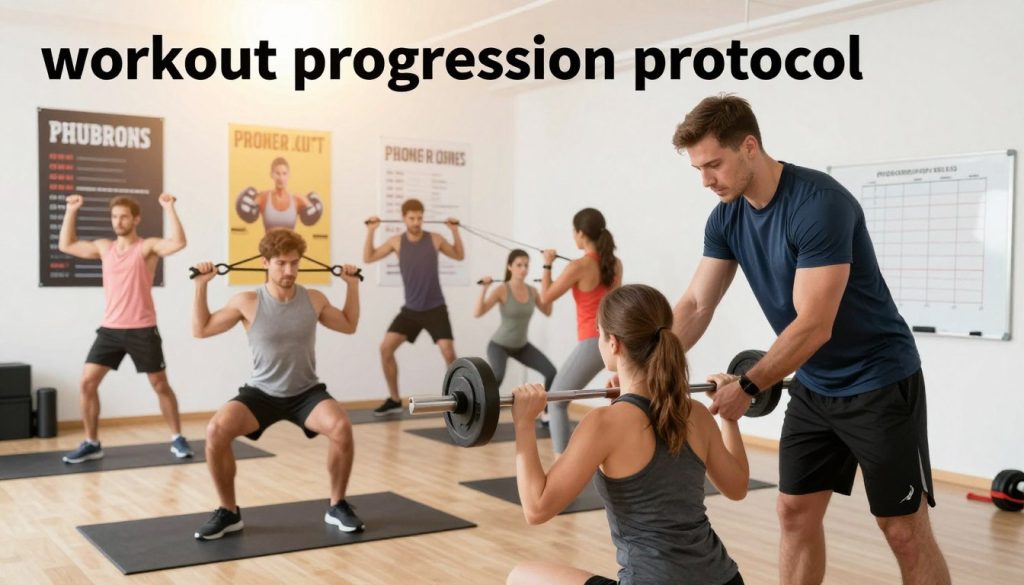
For instance, if you notice that your progress has plateaued, it may be time to reassess your exercise optimization method and make necessary adjustments to challenge your body further.
Recognizing When to Advance to the Next Level
Advancing to the next level in your body transformation program requires careful consideration of your progress. When you’ve consistently met your KPIs and feel that your current routine is no longer challenging, it’s likely time to advance.
This could mean progressing to more complex exercises, increasing the volume or intensity of your workouts, or adopting a more advanced exercise optimization method.
6. Overcoming Common Challenges in Your Health Improvement Regimen
Maintaining a consistent and effective health improvement regimen involves overcoming various hurdles along the way. As you progress through your fitness program, you’ll likely encounter challenges that test your resolve and commitment.

Managing Progression Speed and Avoiding Overtraining
One of the key challenges is managing the progression speed of your workout routine. It’s essential to strike a balance between pushing yourself hard enough to see improvements and avoiding overtraining, which can lead to injury or burnout.
- Monitor your body’s response to increased intensity or volume.
- Gradually increase the difficulty of your workouts.
- Listen to your body and take rest days as needed.
Balancing Training Intensity With Adequate Recovery
Achieving a balance between training intensity and adequate recovery is crucial. While intense training is necessary for progress, recovery is where the actual improvement happens.
- Ensure you’re getting enough sleep each night.
- Prioritize nutrition that supports recovery.
- Consider incorporating recovery techniques like foam rolling or stretching.
Addressing Nutrition and Lifestyle Factors
Nutrition and lifestyle factors play a significant role in your overall health and fitness journey. A well-balanced diet that supports your energy needs and recovery is essential.
- Focus on whole, nutrient-dense foods.
- Stay hydrated by drinking plenty of water.
- Limit processed foods and sugars.
Staying Consistent During Plateaus
Encountering a plateau can be discouraging, but it’s a normal part of the fitness journey. The key is to stay consistent and make adjustments as needed.
To overcome a plateau, consider the following strategies:
- Reassess your goals and adjust your training program accordingly.
- Introduce new exercises or challenges to your routine.
- Seek guidance from a fitness professional if needed.
By understanding and addressing these common challenges, you can maintain a successful and effective health improvement regimen that supports your long-term fitness goals.
7. Conclusion
By following the Body Performance Progression System, you can unlock your body’s full potential and achieve significant improvements in your overall fitness and well-being. This comprehensive physical development system is designed to help you optimize your sports performance enhancement strategy, ensuring you reach your goals efficiently.
A key aspect of this system is its focus on progressive overload and strategic recovery, allowing for optimal adaptation and growth. By incorporating a well-structured health improvement regimen, you can overcome common challenges and stay on track with your fitness journey.
As you continue on your path to improved physical fitness, remember that consistency and patience are crucial. With the right sports performance enhancement strategy in place, you can achieve lasting results and enjoy a healthier, more active lifestyle.